
COST Actions gather researchers and innovators from all career levels, from PhD students to Nobel Prize winners. Thanks to this unique blend, young researchers and innovators can network and build contacts with experienced peers, benefitting from advice, mentorship, open exchange, and scientific collaboration.
Our research networks also offer many training opportunities, equipping young talent with new knowledge and skills whilst also providing space to develop self-confidence, hone communication skills, and gain leadership experience.
Just over a year ago COST Association announced additional measures to support young researchers including new grants, training opportunities, and leadership positions and today we have the following state of play:
42% of all COST Action participants are Young Researchers and Innovators
15% of COST Action leadership positions are adopted by Young Researchers and Innovators
17% of COST Actions are led by Young Researchers and Innovators
33% of proposers in the last Open Call were Young Researchers and Innovators
Dedicated grants for young researchers and innovators
In November 2024, COST, though its network of COST Actions, introduced a new mobility grant for young researchers and innovators to facilitate attendance at beneficial international conferences that are not organised by the Action. In it’s first year 714 grants were distributed, facilitating participation in events to help young researchers and innovators widen their professional network, learn from experts in their field, and present their research helping to establish themselves in a specific domain.
But what is the real impact of a grant like this for a young researcher? We catch up with some of the first recipients of the grant from the COST Action ADVANCE-TB to discover where they went and the impact it generated:
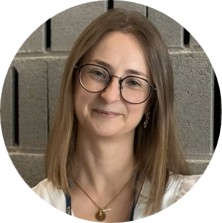
My experience at ESCMID Global 2025 in Vienna was extremely positive. It was the first time I was able to attend this important international conference, which was only possible through the ADVANCE-TB grant. I present my work on antimycobacterial drug discovery to an international audience, increased the visibility of my research, and established new collaborations and strengthened existing ones within and beyond the ADVANCE-TB network.
Grants such as the COST Young Researcher Conference Grant are essential for early-career researchers, as they facilitate access to high-level international conferences and networks. These opportunities are critical not only for disseminating research but also for building collaborations, gaining visibility, and developing the skills necessary for independent scientific careers.
Tânia Martins da Silva from i3S/ICBAS at the University of Porto gave a poster presentation at ESCMID Global 2025 in Vienna, Austria.
I very much enjoyed attending the International Conference on Anti-Infectives in Saarbrücken. The strong focus on medicinal chemistry made the lectures highly relevant to my research, allowing me to follow them closely and take away useful insights. The conference also dedicated substantial time to poster sessions, which created valuable opportunities to discuss my work and engage with other researchers.
While presenting my poster, I initially felt that my work did not attract much attention beyond a few discussions. However, this perception changed when I was awarded a poster prize based on participant voting. This experience highlighted that people do take note of your work even without extended interaction, and the positive feedback I received on the clarity and presentation of my poster reinforced my confidence in communicating my research effectively.
Overall, the conference helped me present my work, increase its visibility, and connect with others in my field. Grants like this are crucial for early-career researchers, as they make conference attendance more accessible and support the development of professional networks, confidence, and independence.
Nina Gradišek from the Faculty of Pharmacy at the University of Ljubljana gave a poster presentation at HIPS – International Conference on Anti-Infectives (ICA 2025) in Saarbrücken, Germany.
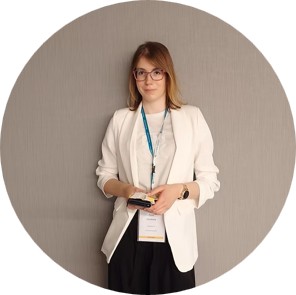
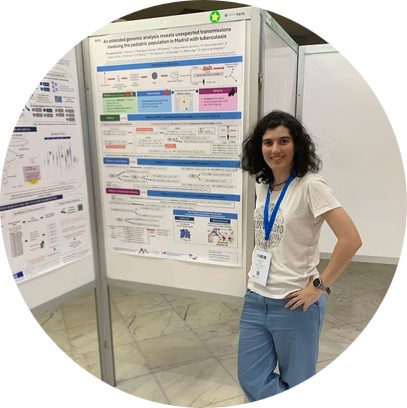
My experience at the ESM Congress was very positive, needless to say that I couldn’t have assisted without the Grant. There I met a lot of people working with the same organism (and also different species but from the same genus) which helped a lot in making connections, learning new things about Tuberculosis like resistances, updates in antibiotics, tools to analyze, or even new protocols.
This grant also help me a lot in presenting my work. It allowed me to receive feedback from experts to enrich the data and also help me make connections and exchange papers and ideas.
Marta López from the Instituto de Investigación Sanitaria Gregorio Marañón gave a pitch and presented a poster at the 45th Annual Congress of the European Society of Mycobacteriology in Lisbon, Portugal.
What is the COST Action community doing to support young researchers and innovators?
There are already many great examples of COST Actions going above and beyond to support young researchers and innovators. Here are some recent best practices from our networks:
SHiFT podcast for interdisciplinary career inspiration
The SHiFT YRC Podcast is your go-to space for transformative career journeys, research insights, and expert advice. Produced by the passionate Young Researchers Council (YRC) of SHiFT Cost Action, this podcast explores explores transformative career journeys and how to shape the future of the research field. Their mission? To inspire, connect, and share knowledge within the SHiFT community and beyond.
“The period after the PhD is something that, in academia, people don’t often talk about. It is a jungle, full of unwritten rules and unseen paths. So we decided to shed light on these paths, and creating an interview-based podcast felt like the most logical answer. There are infinite pathways we can take, we can live. Through the SHiFT YRC Podcast, we started sharing them to help each other see them, and take inspiration.” explains Barbara Maria Frigione, SHiFT YRC Head of Communication and Dissemination and Podcast Producer.
The podcast covers topics as wide and varied as the challenges of moving abroad for new career opportunities, the opportunities SHiFT COST Action provides, the different career choices for researchers, insightful suggestions on how to start your own and unique career path, and the important role of young researchers in addressing global challenges.
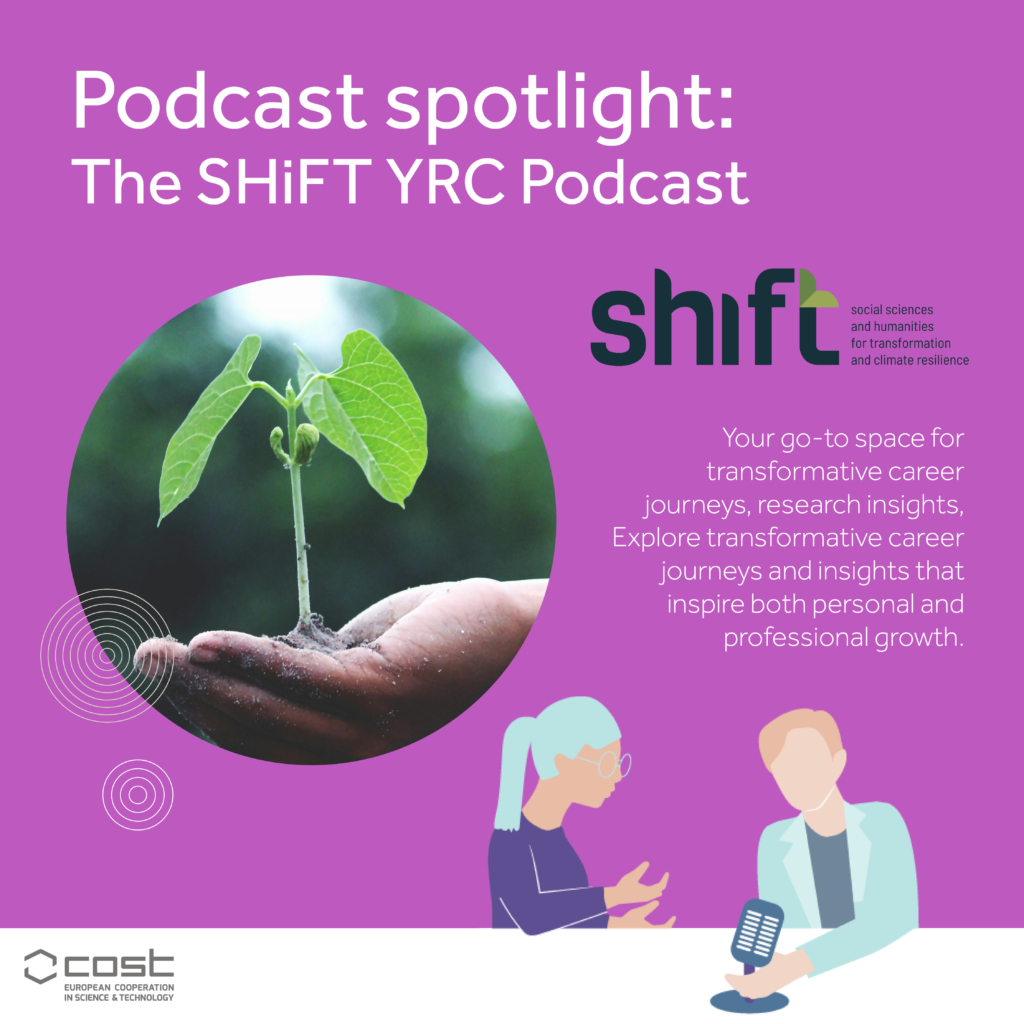
The podcast is, above all, a safe space for discussing ideas and building bridges between research and researchers. This interaction, which takes place partly outside the academic world, ultimately complements the experiences and challenges of being part of it. Through these discussions, beyond the shared scientific knowledge, participants and listeners discover many things they have in common, one of which is a sense of community.
Ferlanda Luna, SHiFT YRC Co-Head of Events
“We’ve been so amazed by the positive feedback we have received from this initiative. From both within SHiFT but also from the COST Action community at large. What has been most amazing is the reach this has had within various YR communities that are not even a part of the COST structures – Hearing from fellow colleagues, professionals and students who have indicated what a benefit this podcast has been for them to learn about what career paths are available to them.” explains Larissa Houston, SHiFT YRC Secretary General and Podcast Producer.
So, whether you’re a young researcher or a seasoned professional this podcast is a great resource compiling career tips, inspiration, and meaningful conversations. All episodes are available on Spotify and Youtube and the first episode of Season 2 launches at the end of May.
Equality opportunities and visibility with PANGEOS
Supporting young researchers and innovators is a core principle of COST, and PANGEOS puts this into practice by entrusting young researchers and innovators with meaningful responsibilities.
“In PANGEOS, we planned YRI promotion as part of our CORE group leadership structure from the start. Taking on leadership roles in a COST Action can be a great experience for YRIs, but it also comes with time-consuming responsibilities. I’ve been there, eager and under pressure, and wanted to be mindful of people’s other commitments and main job responsibilities. In the end, taking on leadership roles in a COST Action is a great experience and can be great for anyone’s career, but it is mostly an opportunity to volunteer service to the greater benefit of the scientific community.” explains Dr. Shawn Kefauver, Chair of PANGEOS.
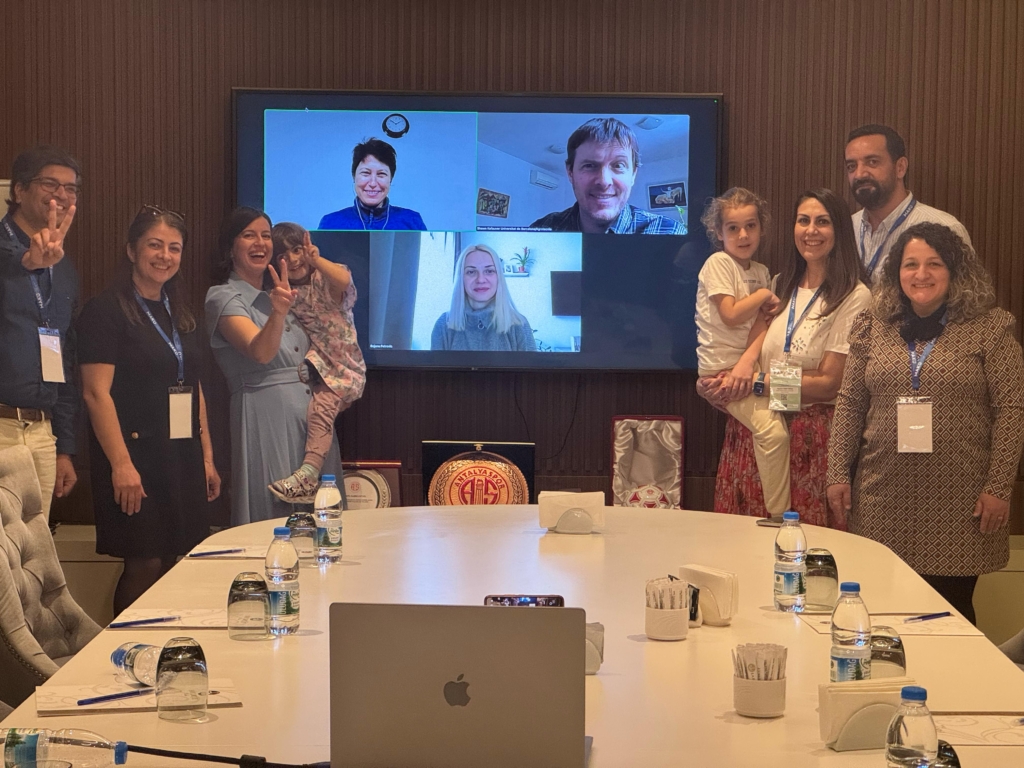
Dr. Bojana Petrović, a young researcher from the Faculty of Forestry and Wood Technology at Mendel University in Brno, was offered the opportunity to coordinate a major PANGEOS engagement activity. Working together with Vice-Chair Dr. Dessislava Ganeva and Science Communication Coordinator Dr. Esra Tunç Görmüş, Bojana has helped lead a monthly webinar series, which has already delivered 11 sessions with 21 presenters from different disciplines, countries, and career stages who were mainly YRIs.
“Taking a role in the science communication team of PANGEOS was a challenging but genuinely formative experience. Coordinating the monthly webinar series alongside senior colleagues pushed me well beyond my comfort zone, managing schedules across time zones, communicating with researchers from different disciplines and career stages, and learning to lead rather than just participate. It required more time and effort than I initially expected, but that is precisely where the growth happened. I developed skills in scientific communication and international collaboration that I would not have gained otherwise, and gained visibility in a network I am proud to be part of. From my perspective, for any early-career researcher, being given real responsibility and real trust makes all the difference. So, I am very grateful that I have had the chance to be part of it.”
Dr Bojana Petrović, PANGEOS COST Action
This initiative has created an inclusive platform for knowledge exchange, networking, and mentorship, enabling early-career researchers to connect with experts, strengthen their communication skills, broaden their scientific perspectives, and gain confidence through regular international interaction. It stands as a strong example of how COST Actions foster capacity building, collaboration, and brain circulation by empowering young researchers through active leadership.
All webinars are publicly available on the PANGEOS YouTube channel, increasing visibility and accessibility, while also giving YRIs an international platform.
CaLISTA training on scientific writing and dissemination skills
Researchers have to develop skills that extend far beyond their research field, from presentation skills to outreach and public engagement, grant application writing, Open Science best practices, project management. But few of these are taught explicitly to those starting out in a research career, they are acquired along the way, often through a combination of trial and error.
CaLISTA, a network of physisists and mathematicians united for a systematic application the ideas and philosophy of Cartan geometry, decided to address this head on and actively support its young researchers in developing these skills, which will be transferable throughout their professional careers.
In April 2026 over 70 young researchers and innovators participated in the CaLISTA Workshop on Scientific Writing and Dissemination Skills, under the initiative of María Antonia Lledó from the Department of Theoretical Physics at the University of València, Spain. Sessions covered topics as wide and varied as scientific writing and publishing, collaboration and networking, time and project management, academic writing beyond papers (e.g. grant applications), and oral expression and argumentation.
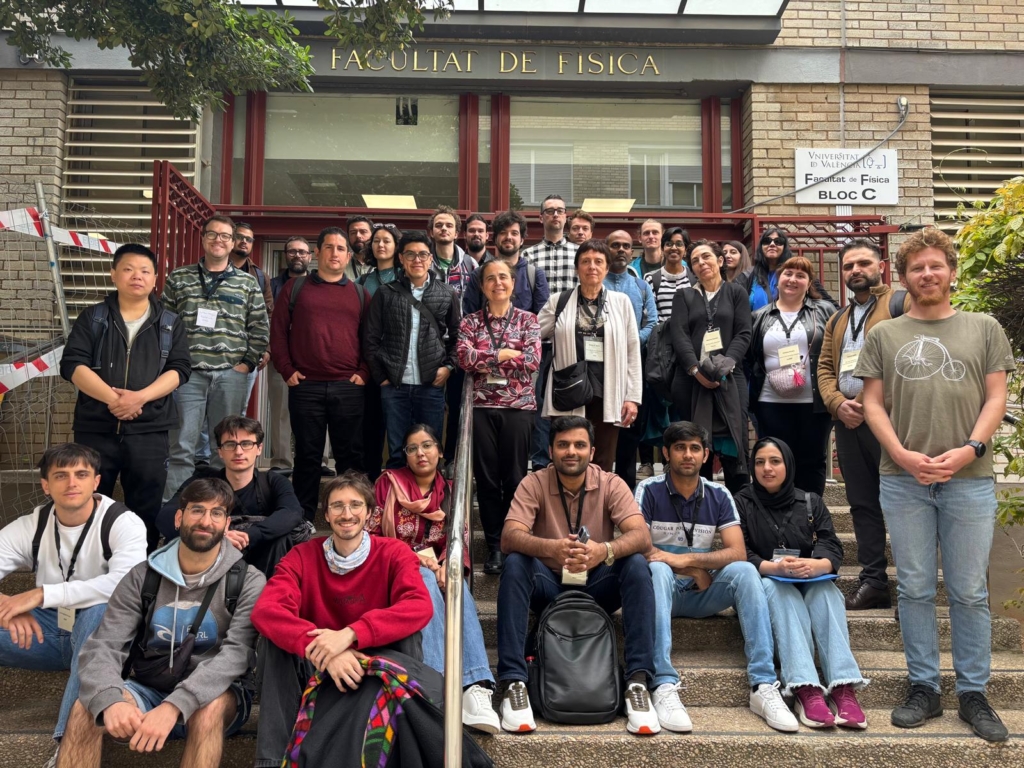
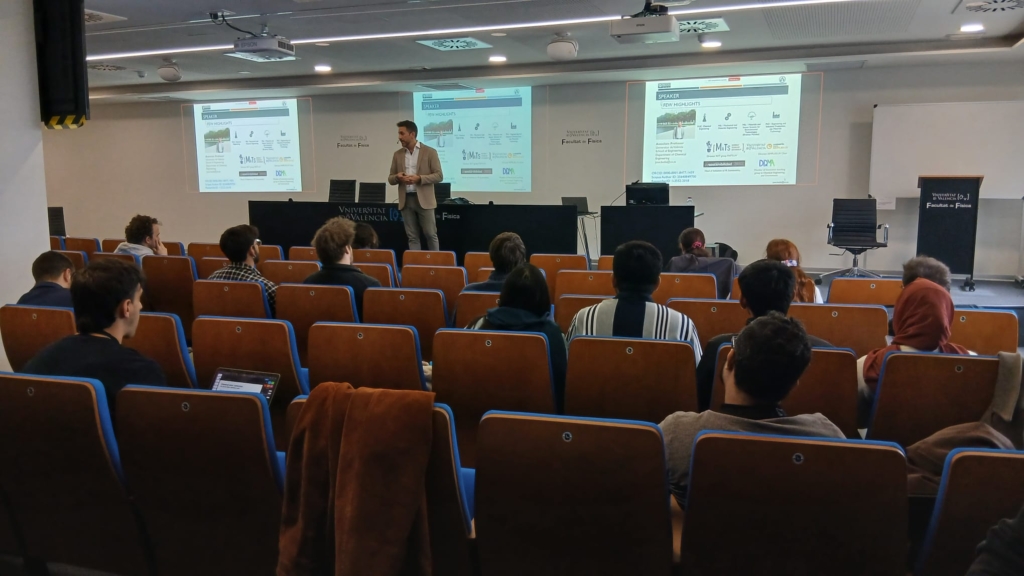
So what did the participants gain from such a workshop?
The CaLISTA training school was a successful, intensive 2-day programme for young researchers, PhD students and postdocs alike. We learnt the importance of paying attention to detail and structure when writing grants, as well as accepting that rejection is a part of the process and it can only help us create successful projects. We learnt about the complexity of scientific publication and how to navigate the inevitable politics of publishing, while also learning about the importance of open-source journals. We discussed the importance of disseminating our research to the broader community. This is a way of getting the general public interested by showing the relevance of the research, which we owe as researchers funded by public funds. A noteworthy lecture was ‘How to give a good talk’, where we covered the basics of a good academic talk, while going into the various finesse to make the talk as memorable as possible.
Marko Brnovic, Italy
The workshop was very informative and covered topics that every early-career scientist should know, regardless of their field. The presenters were very engaging and helpful in clarifying questions. As a new PhD student, this workshop helped build my foundations for being a well-rounded scientist, beyond just the scope of research.
Michalis Chadolias, Spain
All talks were very interesting and honestly seemed very necessary to pursue a professional life in academia. They covered how researchers are evaluated but also raised some questions regarding the ethics behind the methods and possible alternatives including some that are already being implemented. I also found quite indispensable talking about how science is communicated to non-experts and why this is fundamental to keep research going. For these reasons I believe every researcher should be aware of the topics that were discussed during the school.
Alejandro García Rivas, Italy
PhD’s, PostDoc positions, and other job opportunities for ADVANCE-TB members
Finding the right position as a young researchers can be challenging, especially in the PostDoc world where researchers are frequently offered minimal job security and required to relocate internationally. There is also no one centralized placed where PhD or PostDoc positions are advertised and the landscape is quite fragmented.
ADVANCE-TB wanted to make the process easier for those in their early career stages by actively promoting opportunities happening at different universities and institutes that are also part of the ADVANCE-TB network. Tuberculosis (TB) is an infectious disease that continues to affect millions of people worldwide and multidrug-resistant TB is an increasing public health crisis meaning that more research and bright young minds are needed to support the ongoing battle. “Despite the global impact of TB, it does not always receive proportional investment and spotting funding opportunities is usually challenging for early-career researchers. Although there are many challenges, one thing I really admire in TB research is the strong collaborative community which supports visibility and access to opportunity.” explains Dr Raquel Villar Hernández, co-lead of ADVANCE-TB’s Working Group on Communication.
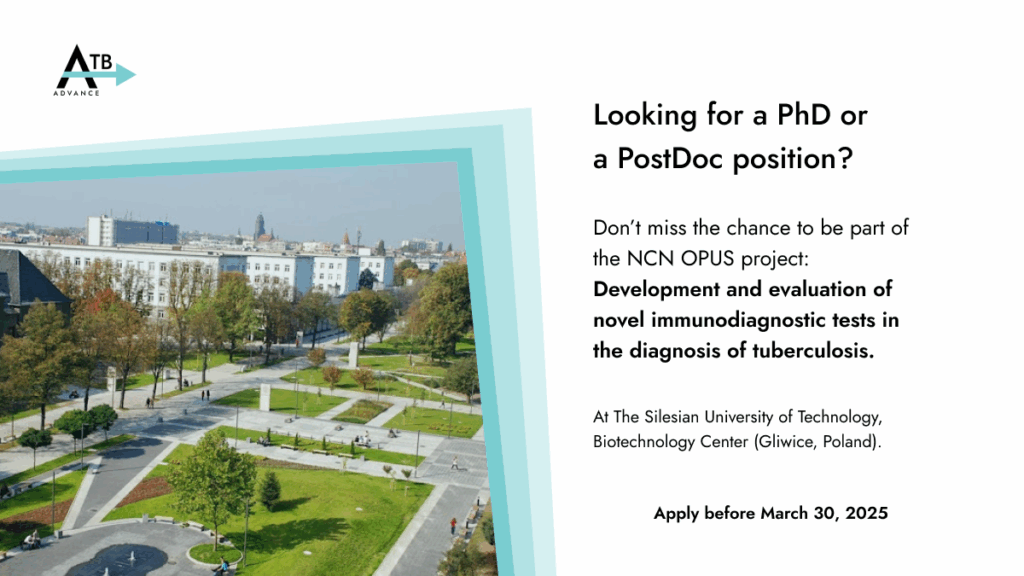
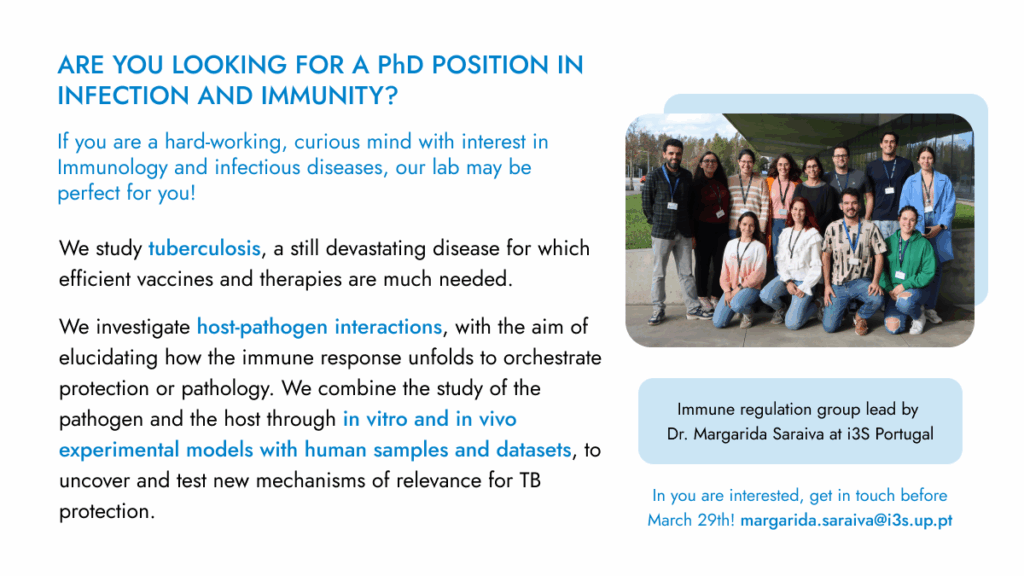
The benefit of promoting opportunities within the network is that younger members have probably already met the member recruiting for this role and both parties know that there is an alignment in mission and vision.
“We felt that it could help connect members with relevant candidates, promote career development, and also highlight the ongoing activity and impact of ADVANCE-TB and TB research in general. We wanted to increase collaboration, attract new talent, and expand the Action’s network.“
Dr Raquel Villar Hernández, ADVANCE-TB’s
The Action regularly shares these PhD, PostDoc, and other job positions via it’s social media channels but ADVANCE-TB are not alone in offering this service to their network. Precision BCT Network run an active job board grouping together different opportunities in the field of biliary tract cancers; OPERA promote jobs and PostDoc positions in material science; METAHEART publish opportunities for careers in cardiovascular research; and DAEMON share regular job listings from Action members in machine learning and materials design.
PROGRAMMING’s throughtful approach to leadership
PROGRAMMING, a network dedicated to bridging gaps in geriatric medicine, empowers young researchers and innovators in numerous ways by combining support for scientific and clinical expertise, capacity building, leadership development, and active involvement in high-impact scientific and policy activities.
Since its kick-off, younger members have actively been involved in the Action’s leadership structure. For instance, taking on roles such as co-leaders or additional leaders within Working Groups, ensuring representation in decision-making and coordination processes. One such example is Dr Rui Buzaco who became the ‘New Members’ Guide’ within the PROGRAMMING network.
Serving as the New Members Guide for the PROGRAMMING COST Action has been an absolute game-changer for my early career. Helping to drive the momentum of a vibrant community of over 400 members from 35+ European countries meant I was working shoulder-to-shoulder with some of the most inspiring leaders in geriatric medicine. Together, we actively designed strategies to welcome new peers, build engagement, and keep this incredible network dynamic.
Dr Rui Buzaco, PROGRAMMING COST Action
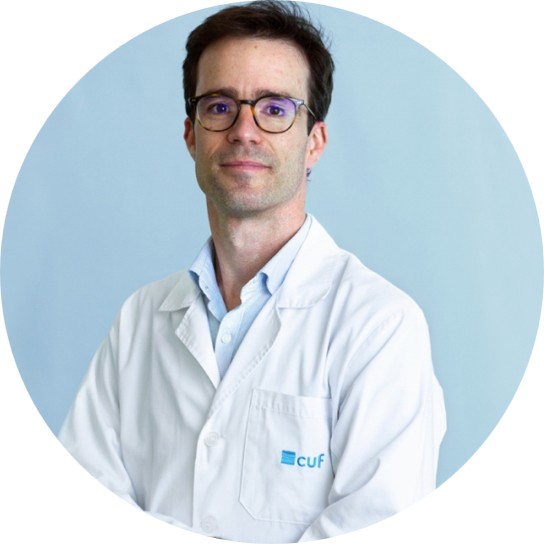
In this role he is responsible for assisting each Management Committee Members in updating the list of pending applications from new members to join PROGRAMMING. He has also developed a welcome kit for new members, helping them to become quickly acquainted with PROGRAMMING and actively participate in ongoing activities. His contribution greatly helps this Action to strengthen its effectiveness as it enters its final years of activity. But how has this experience benefitted Rui for his future professional endeavours? “On a personal level, this role gave me a front-row seat to the vastly different healthcare realities across Europe. It sharpened my understanding of the current bottlenecks we face, but more importantly, the massive opportunities we have to genuinely improve healthcare for older adults—which is my absolute passion. Coming from Portugal, where geriatric medicine is still an emerging field, having a seat at the table in such an elite, international community has been invaluable. It has given me the leadership skills, the global network, and the pure enthusiasm to help shape the future of our field.” he concludes.
What can you do?
Are you a Young Researcher or Innovator? Inspired to join a COST Action to grow both your network and skills? Browse our 260+ ongoing Actions to see if there is a research network of interest to you and apply to join.
If you’re already part of a COST Action then put yourself forward for a leadership position. All COST Actions must ensure that at least one leadership position within the network is reserved for a Young Researcher or Innovator to help develop leadership skills and gain experience in international projects. Support is available to help develop your leadership skills through our COST Academy trainings.
Young researchers and innovators can also get involved at proposal stage. The COST Open Call opens on 31 July 2026 and up to 80 new networks will be funded. Now all proposals must comprise at least 40% young researchers and innovators which offers an opportunity to develop skills in proposal writing and grant submission.
Finally, many announcement of upcoming COST Action Training Schools, grants to attend conferences sponsored by an Action, or calls for for Short-Term Scientific Missions are advertised on the COST Action event page or visit the website of an Action you like to discover what opportunities they have available.