

development of Concrete Structures for Desalinatio Plants (CVE-153)
Migration -Europe's Integration and the Labour Force Brain-drain - Contractor: Institute for Quality of Life Romania
NEODIET - Bioactive Plant Cell Wall Components in Nutrition and Health
Advanced Materials for Power Engineering Components
Work Package 5
Health Effect Assessment - Report 2

The Good, the Bad, the Unexpected: Conference Proceedings Volume I
- Pages: 666
- Author(s): B. Sapio, L. Fortunati, L. Haddon, K. Kommonen, E. Mante-Maijer and T. Turk
- Publisher(s): OPOCE
- Download from external website
- Download PDF
- ISBN/ISSN: 978-92-898-0041-9
- EUR: 23328
The main objective of the conference was to create new knowledge about users’ creativity and facilitate their empowerment in a broadband information society. This knowledge is crucial in order to strengthen the European Research Area. Moreover, this requieres an examination of the factors that can both constrain and enhance users’ abilities to shape and use ICTs. In this conference, the organisers invited technology and product developers, designers, social scientists, policy makers, community representatives and others who are interested in the conference topics, to join the attempt to develop this discussion on a common, shared and transdisciplinary ground.
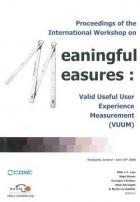
Meaningful Measures: Valid Useful User Experience Measurement (VUUM)
- Pages: 100
- Author(s): E. L-C. Law, N. Bevan, G. Christou, M. Springett, M. Lárusdóttir
- Publisher(s): Institute of Research in Informatics of Toulouse
- Download from external website
- ISBN/ISSN: 978-2-917490-02-0
Roads are of outmost importance for mobility of people and transport of goods throughout Europe. Experts believe that up to 50% of the total maintenance budget is spent on winter maintenance in many European countries. It therefore has a high significance not only in keeping roads, cycle tracks and footways free from ice and snow but also in matters of pedestrians, cyclist and driver safety. Cost Action 353 “winter service strategies for increased European safety” started in April 2004 and ran for a four year period until April 2008.
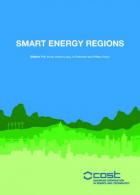
Smart Energy Regions
- Pages: 285
- Author(s): Jones, P., lang, W., Patterson, J, Geyer, P. (Eds.)
- Publisher(s): The Welsh School of Architecture, University of Cardiff
- Download from external website
- ISBN/ISSN: 978-1-899895-14-4
This book presents work undertaken as part of the COST Action Smart Energy Regions (SMARTER). It illustrates how relevant policies are being implemented in 26 European countries participating in the Action and how these are helping to progress the low carbon agenda relevant at a regional scale, illustrating how industry and broader stakeholder groups can be involved in the process.