From scientific exchange to new opportunities
More than 2000+ Short-Term Scientific Missions (STSM) are funded yearly by COST. Open to researchers at all career stages, STSMs are one of COST’s most impactful networking tools. These scientific missions allow researchers involved in a COST Action to visit a university, a research institute or laboratory in another country to collaborate, access expertise and research infrastructure that may not be available at their home institution.
Although these missions are called “short-term”, their impact often extends well beyond the exchange. The Impact Assessment Study on Short-Term Mobility found that STSMs contribute to higher-quality research, developed skills, and new research collaborations, projects and proposals. Many STSMs also lead to joint publications between the visiting researcher and the host, or even common European or national research proposals. STSMs provide a good opportunity for both young and experienced researchers looking for mentoring and lifelong learning while helping institutions and COST Actions strengthen their networks, foster collaboration, and develop new scientific outputs.
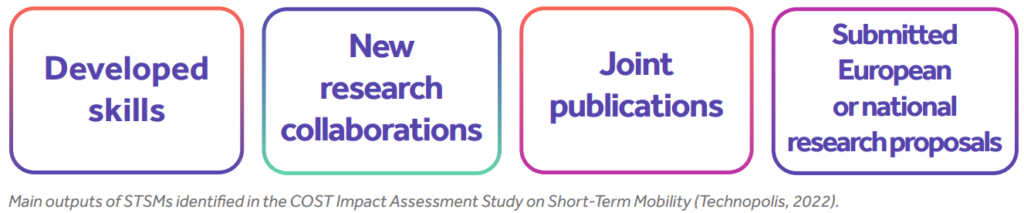
The following experiences illustrate how an exchange period can lead to lasting impact.
Marija Banožić
Building networks and opening new research opportunities
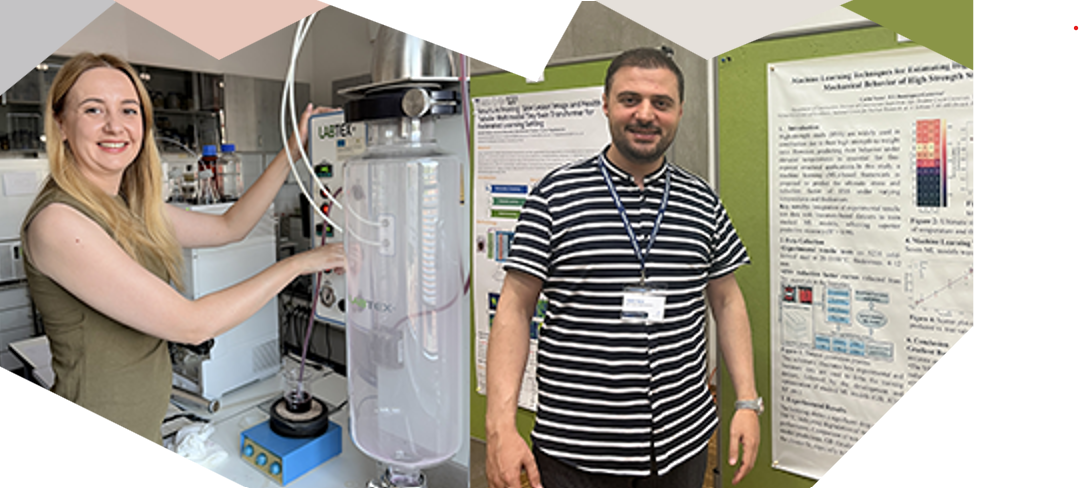
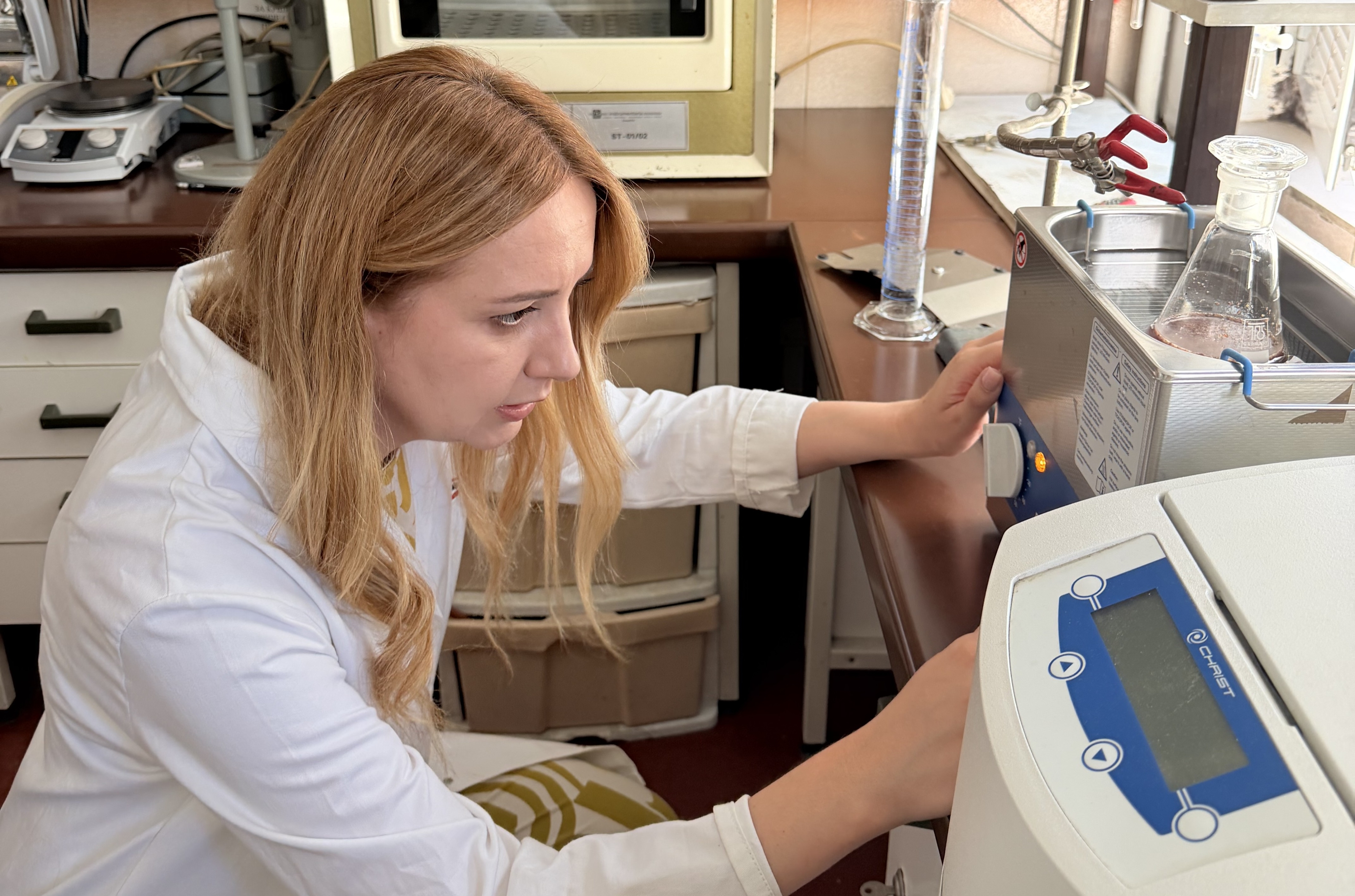
Within the COST Action ‘Sustainable network for agrofood loss and waste prevention, management, quantification and valorisation’ (FoodWaStop), Marija Banožić completed an STSM at the Institute for Medicinal Plant Research Dr Josif Pančić in Serbia. There, she explored encapsulation methods for bioactive compounds. During her visit, she worked with local researchers and had the opportunity to use equipment unavailable at her home institution, allowing her to use spray drying techniques to preserve valuable natural compounds recovered from leftover grape materials. Having recently completed her PhD, Marija understands the challenges that young researchers face when accessing new opportunities. She highlights how the STSM provided an important opportunity to build her research network and develop new scientific partnerships that helped shape her research direction.
Within the COST Action ‘Sustainable network for agrofood loss and waste prevention, management, quantification and valorisation’ (FoodWaStop), Marija Banožić completed an STSM at the Institute for Medicinal Plant Research Dr Josif Pančić in Serbia. There, she explored encapsulation methods for bioactive compounds.
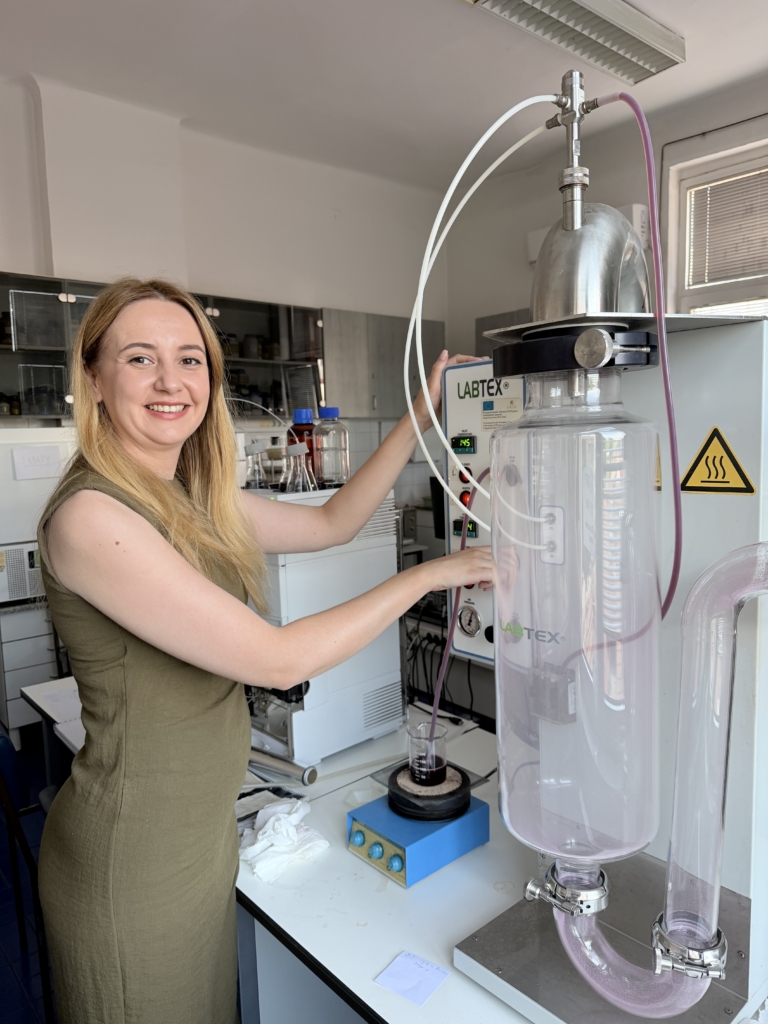
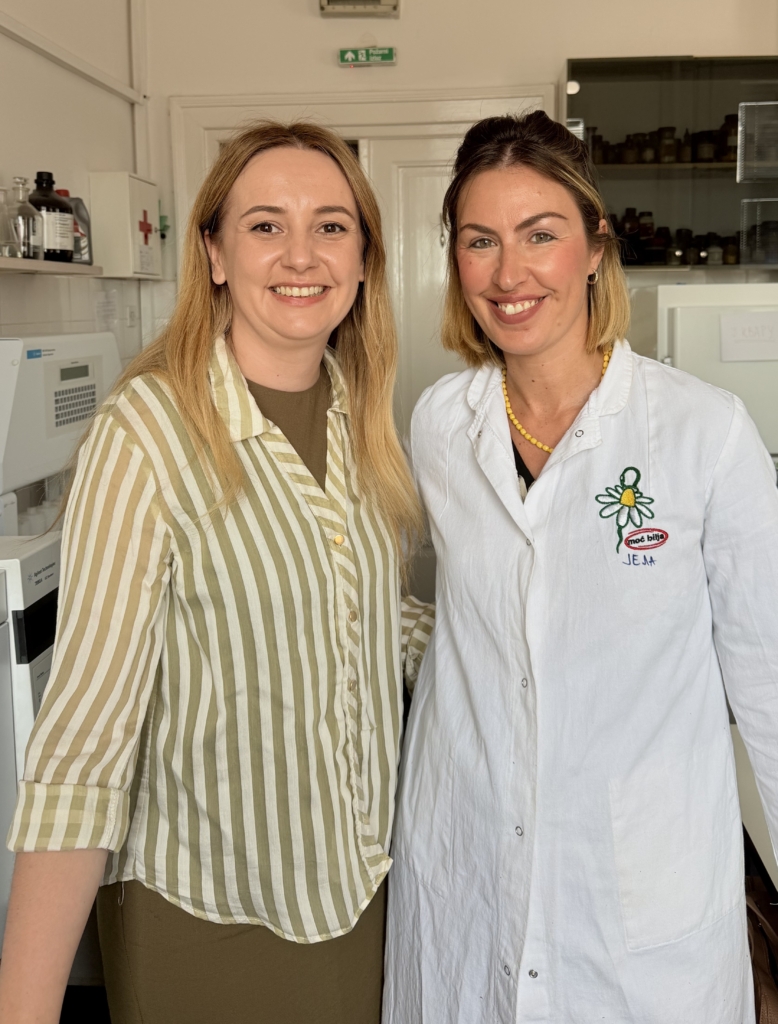
During her visit, she worked with local researchers and had the opportunity to use equipment unavailable at her home institution, allowing her to use spray drying techniques to preserve valuable natural compounds recovered from leftover grape materials.
Having recently completed her PhD, Marija understands the challenges that young researchers face when accessing new opportunities. She highlights how the STSM provided an important opportunity to build her research network and develop new scientific partnerships that helped shape her research direction.
Marija’s experience reflects the wider impact of COST STSMs, which support researchers at different career stages and promote inclusive participation, including researchers from Inclusiveness Target Countries. By providing access to infrastructure and international expertise, STSMs create opportunities for researchers to develop professionally and establish lasting collaborations.

Casim Yazıcı
From a short research visit to a new research direction
Casim Yazıcı experienced the benefits of this collaboration first-hand during an STSM within the COST Action ‘European Materials Informatics Network’ (EuMINe). This Action focuses on building an interdisciplinary network that uses AI and digital, data-driven technologies to advance the development of materials and applications. The STSM became the starting point of a new research direction in Casim’s professional journey.
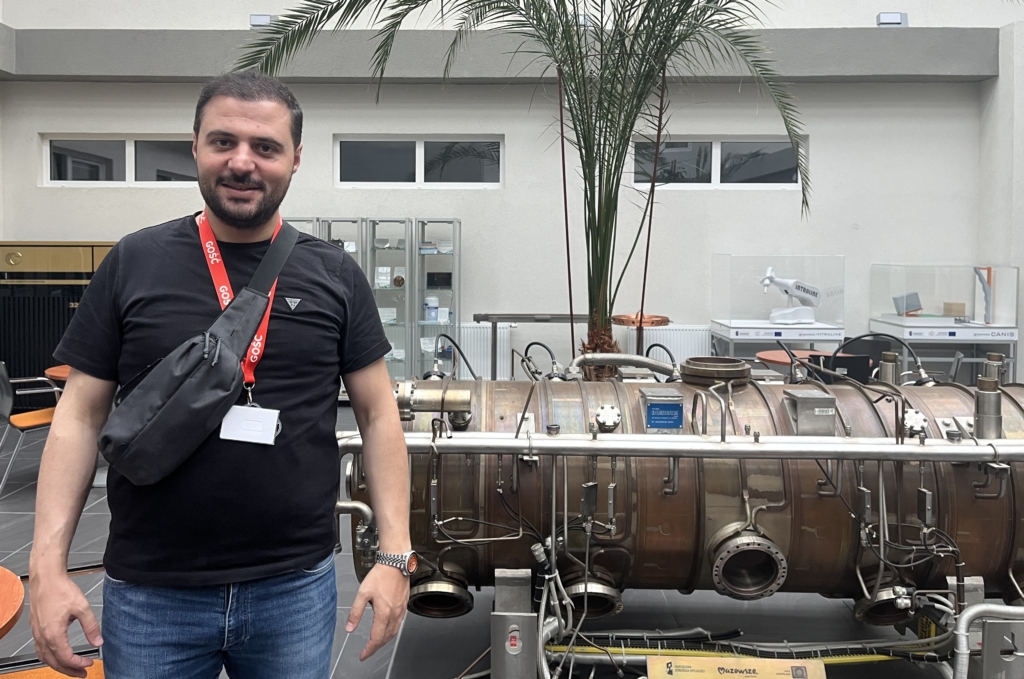
Prior to Casim’s visit to the National Centre for Nuclear Research (NCBJ) in Poland in 2024, his research mainly relied on experimental studies and finite element analysis. Thanks to his stay at NCBJ, he was able to explore how experimental data, numerical modelling, programming, and machine-learning methods could be combined to address research questions from a broader and more interdisciplinary angle.
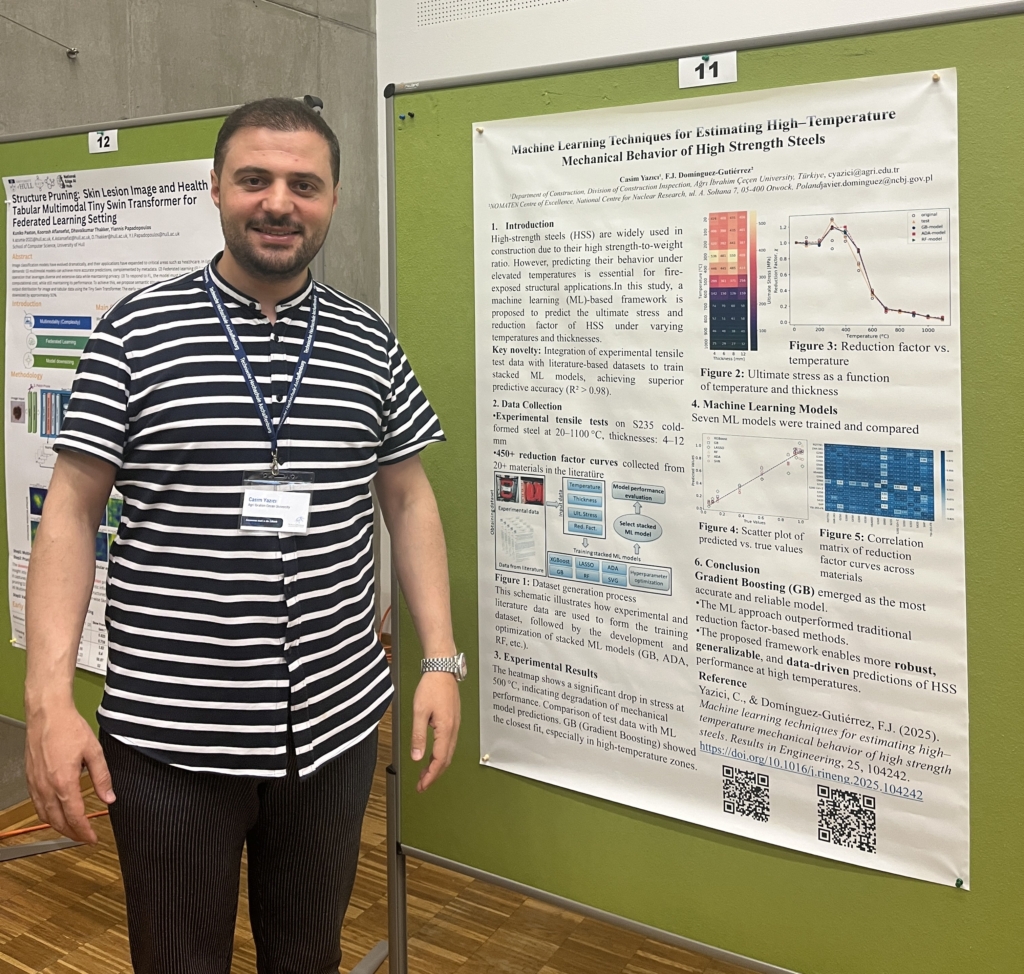
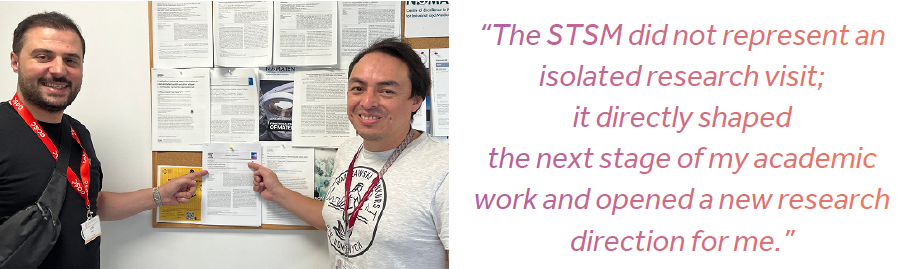
This experience introduced him to new computational approaches, expanding his research toolkit and creating an international network that continued beyond the STSM itself. The collaboration with Javier Domínguez, his host in NCBJ, already resulted in three joint publications and a joint Türkiye-Poland research project proposal.
Casim encourages young researchers to apply for an STSM and create the most connections and opportunities that might converge in long-term scientific partnerships. For him, some of the most valuable outcomes came not only from the planned research activities, but also from discussions, shared problem-solving, and the openness to explore new approaches and ideas.

Discover more stories and other STSM experiences from the COST community
Watch STSM testimonials on YouTube:
Read some examples from our STSM campaign on LinkedIn: