The World Day for Safety and Health at Work, led by the International Labour Organisation, is marked each year on 28 April. The day raises global awareness of how to prevent accidents and diseases in the workplace, while remembering those who have been injured or lost their lives at work.
To observe this day, the following success story explores what happens after an unexpected medical error in a hospital. It reveals how such incidents can profoundly affect healthcare professionals as ‘second victims’, highlighting the hidden emotional toll that has long been overlooked in workplace safety.
When those who heal are hurt
What happens when an unexpected medical error occurs in a hospital? As the old saying goes, “Errare humanum est” (to err is human). Many of these events involve honest mistakes arising from system failures, heavy workloads, or communication breakdowns, rather than recklessness. It isn’t only patients who suffer in such situations. After such events, healthcare professionals themselves often become the ‘second victims’, suffering emotional distress that can lead to burnout, depression, or even leaving the profession. For decades, their silent struggles went largely unnoticed, hidden behind a culture that equated error with failure.
15% of total hospital expenditures can be directly attributed to adverse events in patient care*
12% of adverse events lead to severe outcomes, including permanent disability or death*
49% of avoidable adverse events result in mild consequences*
*Source: SSPH+ | The European Researchers’ Network Working on Second Victim (ERNST) Policy Statement on the Second Victim Phenomenon for Increasing Patient Safety
However, this is beginning to change thanks to the work of COST Action The European Researchers’ Network Working on Second Victims (The ERNST Group) and its follow-up project, European certification of interventions in support of second victims (RESCUE), which is funded through the COST Innovators Grant (CIG). Europe is beginning to acknowledge that caring for those who care for us is not a luxury, but a foundation for safer, stronger healthcare.
“The most fulfilling part has been watching something that was once invisible become a visible and respected topic on the European agenda,” says Professor José Joaquín Mira of The Foundation for the Promotion of Health and Biomedical Research of the Valencian Community (Fisabio), Chair of the Action and the CIG.
Building a European safety net
The ERNST Group united experts from 31 European countries to study the emotional impact of adverse events on healthcare professionals, those moments when something goes wrong despite the best of intentions.
Traditionally, emotional support in healthcare started only after something went wrong. The ERNST Group changed that thinking by proposing the ERNST Five-Tier Model that begins much earlier:
- Prevention – building awareness and resilience before harm occurs.
- Self-care – giving professionals tools to manage stress and seek help early.
- Peer support – trained colleagues offering confidential, empathetic conversations.
- Structured professional support – psychologists and occupational health experts stepping in when needed.
- Clinical care – targeted treatment for severe emotional consequences.
This model doesn’t just protect individuals. “It’s a cultural shift in healthcare,” says Professor Mira. “From isolation and guilt to support and shared responsibility. It gives professionals a safety net and helps institutions retain talent and foster a just culture.”
The first important milestone was when the Action published its Policy Statement on the Second Victim Phenomenon, endorsed by experts from 29 countries and featured in Public Health Reviews in 2024. For the first time, Europe had clear, evidence-based recommendations and policy proposals to guide institutions in supporting healthcare professionals after adverse events.
“That document consolidated years of research and dialogue,” recalls Professor Mira. “It captured the attention of health authorities and even reached the President of the European Parliament, with whom our colleague Professor Sandra Buttigieg had the opportunity to discuss our approach to addressing this problem across Europe. That was the moment we realised we had moved from research to real influence. It became the foundation for developing a guidance and recognition system that shows institutions how to organise interventions that strengthen resilience and address the second victim phenomenon.”
Turning research into action
Another important step was the COST Innovators Grant RESCUE that turned years of dialogue into a concrete plan of action. “It confirmed that our work had matured into something actionable, scalable, and capable of driving real change across Europe,” remembers José Joaquín Mira.
RESCUE transformed The ERNST Group’s findings into a RESCUE certification system for hospitals and professionals. It set European standards for what effective second victim support should look like, ensuring that healthcare staff receive timely, structured help when they need it most.
The certification is not just a badge of quality. It’s a framework for building trust between professionals and their institutions, and between patients and the healthcare system.
“RESCUE provides a validated, evidence-based framework to ensure that second victim support systems are truly effective,” explains Professor Mira. “For hospitals, it’s a way to strengthen credibility and create a just culture. For professionals, it means structured, timely support. And for patients, it means safer care delivered by emotionally resilient professionals.”
“The economic case for action is as strong as the moral one,” continues the Chair. “In a German study, the annual cost of not addressing the second victim phenomenon for a single nurse was about €14,000. Our interventions can cut that by half!”
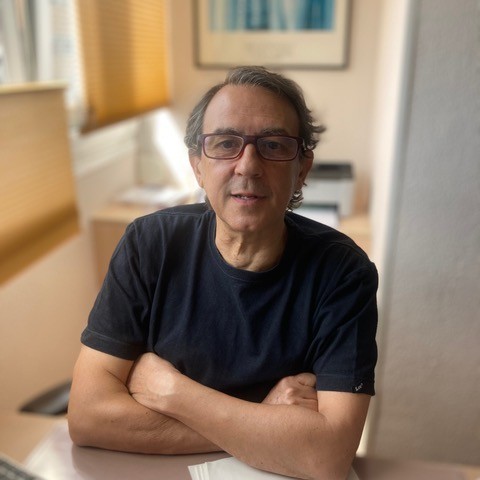
Chair of The ERNST Group and RESCUE CIG
“Real change only happens when there is vision, collaboration, and shared purpose.
And that’s exactly what RESCUE stands for.”
Recognition and reach
In 2024, The ERNST Group received the Butterfly Patient Safety Award from the European Patient Safety Foundation (EUPSF), recognising its groundbreaking work in establishing a European certification framework and training peer supporters.
“Receiving the Butterfly Award was an incredible honour,” says Professor Mira. “But the recognition goes far beyond. Our work is now included in policy briefs and national strategies. The message of ERNST resonates with professionals, patients, families, and civil society.”
A new chapter for patient safety in Europe
In addition to the award, The ERNST Group and RESCUE have been highlighted at WHO workshops, European conferences, and international policy forums. Their training manual, podcasts, and training courses in 7 languages are helping hospitals around the world establish their own support systems.
“Just a few days ago, we signed an agreement with the EUPSF to ensure that our system continues over time,” says Professor Mira. “I believe this adds even more value to the efforts made in these past years.”
For him, the message is simple and consistent. “RESCUE is not only about supporting second victims,” he says. “It’s about improving patient safety. That has always been our goal.”
He sees the work as part of a deeper cultural shift. “Real change only happens when there is vision, collaboration, and shared purpose,” he concludes. “And that’s exactly what RESCUE stands for.”